Contact
If you're building something that has to actually finish, talk to me.
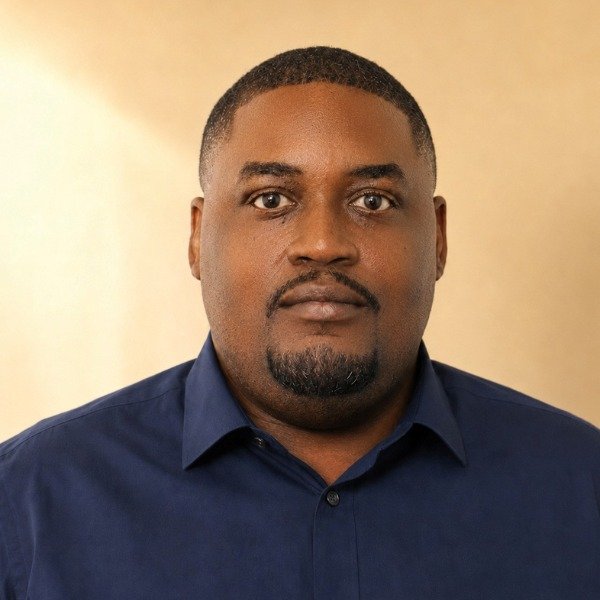
Anybody can launch a transformation. I'm the one who closes it.
Begin the story ↘Decision rights. Handoffs. Team cohesion. The layer where projects actually live or die.
My work sits at the layer most programs ignore, where decision rights, handoffs, and team cohesion determine whether the technology ever earns its business case.
A weekly series on how complex work actually gets finished, told through scenarios professionals have personally lived. Human story first, principle named second.
Most AI readiness budgets solve the easiest problem in the building. Prompting takes an afternoon. Knowing where your records live and what error rate your process can survive takes ownership.
When the work is done well, nobody sees what it cost. The refresh gets cut because nothing ever breaks, until the day it does.
AI raised the floor. Everything looks finished now, so discernment stops being a preference and becomes infrastructure.
Systems get proven under the easiest conditions they'll ever face. The real test is the ordinary bad week nobody budgeted for.
When people aren't free to speak, everything looks fine right up until the moment it isn't.
Unclear decision rights quietly turn your most senior person into the slowest part of the system.
No function delivers alone. Coordination isn't overhead, it's the structure everything else stands on.
The most agreeable person on the team is often the exact place where scope creep enters the building.
Handoffs fail in the seams nobody owns. Doing your part is not the same as the work being done.
EQ isn't a soft extra for delivery teams. It's load-bearing infrastructure, and it can be built like one.
Practical AI adoption for Caribbean businesses, without the imported hype or the imported excuses.
What the global AI wave misses about small island developing states, and what we do about it.
The transformations that pay off are rarely the ones that demo well. Look at the unglamorous work first.
A design flaw hiding in plain sight, told the way my grandmother would have told it.
Technical skill gets you in the room. Trust is the asset that compounds over a career.
Stakeholder-facing analysis of distributed resilience, utility-scale solar, and the regulatory design choices that decide whether the grid of the next twenty years serves the island or constrains it. Written for ministry, utility, and regional energy audiences. Implementation realism over advocacy.
I've spent my career inside transformations: the kind that get announced with energy and then quietly meet the org chart. My work sits at the layer most programs ignore, where decision rights, handoffs, and team cohesion determine whether the technology ever earns its business case.
That perspective was built across 11+ Caribbean territories, multiple US cities, and South America. Different regulators, different cultures, same failure patterns. The writing on this site exists because those patterns are recognizable, and naming them is the first step to fixing them.
These days my focus is the coordination layer itself: how multi-entity organizations integrate, modernize, and actually finish what they start. I work best in dialogue, in the room where the org chart meets the technology. The writing here is the field notes from that room.